Shut up and Dance at World Cafe Live at the Queen

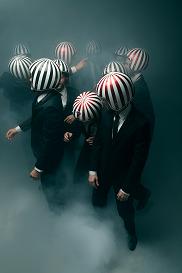
Watch this video about the Orchestra National de Jazz‘s upcoming performance at Wilmington, Delaware’s new World Café Live at the Queen Theatre this Sunday at 7pm.

It looks like a must see!!

France’s Orchestra National de Jazz was created by an initiative by the Frence Ministry of Culture.
This diverse group of musicians is just my style – it sounds somewhere between trance, ambient music, and minimalist composers like John Adams or Phillip Glass – all played by live musicians.

Just the musicianship and recording quality of their CDs as well as the documentary clip above makes indicates the show will be at a very high level, and a perfect way to test out the Queen Theatre’s new state-of-the-art sound system. The group is very well produced, tight, smooth, and grooving, and seem to have great chemistry, which makes magic possible.

The music was composed by American John Hollenbeck working with the orchestra’s new music director Daniel Yvinec, and inspired by the different movements of dance. They included innovative instrumentation including “boomwhackers” as well as up to four people playing the same piano.

According to ONdJ’s website, music director Daniel Yvinec is “an inventor of fertile crossovers… and works… with a unifying force… to bring his creations to life, calling upon the assistance and inventiveness of numerous partners and writers, not to mention prestigious invited guests.”

All in all, this looks like fusion at it’s best and on the cutting edge of what’s out there. Check out “Shut up and Dance” this Sunday before they head on to New York, China and Berlin.

IVA’s writes to you with and in support of PIFA (Philadelphia International Festival of the Arts) <http://www.pifa.org/> . Please Like their Facebook <http://www.facebook.com/PIFA.Philly>  Page and Follow them on Twitter <http://www.twitter.com/PIFAPhilly> !

Want music for your child? Go to Settlement.

choir students at the Settlement Music School

On Monday night I saw a lot of small children being exposed to classical music. Awesome!! Where? It was at the Settlement Music School‘s free concert at the Kimmel Center on Tuesday evening.

Settlement Music School is the largest community school of the arts in the United States. With six locations in South, West and Northeast Philadelphia, Germantown, Willow Grove and Camden, New Jersey, the School provides 10,000 weekly services of individual lessons, classes and activities in music, dance and visual arts to children and adults without regard to age, race or financial circumstances.

 The students’ performances were solid, and I was impressed with the French repertoire that they had prepared in honor of PIFA. There were many different instrumentalists and vocalists showcased. The audience, which included many children (toddlers, tots, and teens), sat respectfully with their parents and paid rapt attention — maybe out of amazement that their peers could make such sound!

So, how can any student have access to this experience?

Settlement Music School Experience – from WHYY

When I switched from public to private school in the fourth grade, one of the biggest changes for me what the addition of regular music classes. The exposure to music and my time spent playing it has led to a life-long love affair…as well as some good grades in school, all which culminated in an incredible experience on a Fulbright Scholarship in Sweden. I was funded to learn Scandinavian music, live, and dream for ten months in Stockholm.

The Settlement Music School seems to make it available to all. According to the website: Settlement’s generous financial and scholarship assistance of more than $2 million each year is among the highest of community schools across the country.

And why did I mention the link between music and studies? The Settlement school writes on their website that they provide a five-day-a-week nationally recognized, arts-centered preschool to inner-city children whose test scores for school readiness are three times greater than peers in a non-arts based program. ** (see below for even more life enriching facts)

So, is Settlement Music School a solution for children who love music and don’t get enough of it in school? Is it for any child, for that matter? The tuition fees are certainly a lower cost alternative to having to put a child into private school. I tried to get more information on how many students receive financial aid, but unfortunately the school is currently on spring break. But according to the WHYY documentary above, whatever you can afford, that’s what you pay. So really, if you want music, you’ve got it at Settlement.

 
Everybody Hates Mondays – Under the Moon: Settlement Music School Summer Jam 2009 


I think having regular music lessons is good for anyone, regardless of their “talent” (whatever that means!). One doesn’t need to make a career in music to live a musical life. If you would like to make a career, however, Settlement says this: Althought founded primarily for the benefit of school-aged children, Settlement developed a conservatory division offerning pre-professional training that was of sufficient stature to serve as the nucleud os the Curtis Institute of Music, established in 1924.

And beyond having music classes for general life enrichment, there is also a chance that your child will be able to find even more opportunities to grow should they be interested. Graduates from the Settlement school include a Nobel Laureate, MacArthur Fellows, Pulitzer Prize winners, a Fulbright scholar, Academy, Emmy, Grammy and Tony Award winners, published authors, elected officials and many distinguished performers in all genres of music.

If you are looking for music lessons I suggest you visit the Settlement Music School or call them at 215-320-2600.

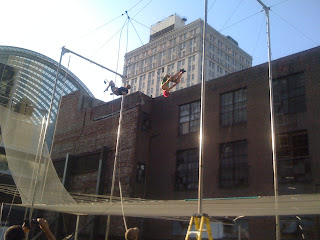
Oh, and what happened to my trapeze lessons? Rained out!
More that in my next installment.

**More information from the Settlement School of the positive benefits music has on a person’s life

• Low-income children attending Philadelphia’s Settlement Music School’s Kaleidoscope’s Preschool
Arts Enrichment Program, show gains in standardized vocabulary scores three times the size
of those demonstrated by their peers attending a nearby preschool with a traditional curriculum.
“Arts Enrichment and School Readiness for Children at Risk” Early Childhood Research Quarterly, 2010

• 71% of Americans surveyed believe teenagers who play an instrument are less likely to have
disciplinary problems.
Gallup Poll, “American Attitudes Toward Music,” 2003

• Students in music appreciation scored 63 points higher on verbal and 44 points higher on math
than students with no arts participation.
College-Bound Seniors National Report: Profile of SAT Program Test Takers. Princeton, NJ: The College Entrance Examination Board, 2001

• Nine out of ten adults and teenagers who play instruments agree that music making brings
a family closer.
Music Making and Our Schools, American Music Conference, 2000

• Students who report consistently high levels of involvement in instrumental music during the
middle- and high-school years show significantly higher levels of mathematics proficiency by grade 12.
James Catterall, Richard Chapleau, and John Iwanaga, “Involvement in the Arts and Human Development,” U.S. Department of Education 1999

• Music majors are the most likely group of college graduates to be admitted to medical school.
Lewis Thomas, Case for Music in the Schools, Phi Delta Kappa, 1994

• The foremost technical designers and engineers in Silicon Valley are almost all practicing
musicians.
Dee Dickinson, Music and the Mind, 1993

This story is brought to you with the support of PIFA (Philadelphia International Festival of the Arts) <http://www.pifa.org/> . Please Like their Facebook <http://www.facebook.com/PIFA.Philly>  Page and Follow them on Twitter <http://www.twitter.com/PIFAPhilly> ! 

A Lyrical Opera and ?uestlove with Keren Ann

This weekend was another one full of PIFA events, and I attended two on Sunday.

Portrait of Gertrude Stein by Picasso

The first was at the University of the Arts, a musical with text by Gertrude Stein written by William Turner called “A Lyrical Opera Made by Two“. Made by two referred to Stein’s feeling that he life was made by her and her partner. She even said “my wife is my life is my life is my wife.” It took me a while to get used to Stein’s elusive texts, as well as the style and singing of the piece. I thought it would be an opera, but it was more like intelligent musical theatre. While the students gave strong performances, I felt that the piece as a whole came across as relentlessly pleasant. I could tell that Stein used her absurd form to clear the mind – by contemplating the incontemplable. One line in particular summed it up: “it has not been what has been thought” as it was hard to put a finger on .. anything. My boyfriend (he was a good sport this weekend!) mentioned that the balance of the piece was based on the author in the sky, and in that way it was hard to feel a connection with the characters on stage. Still, when it was over, I did feel I had a good idea of Stein’s writing and life, and was happy to have had my horizons broadened.

?uestlove

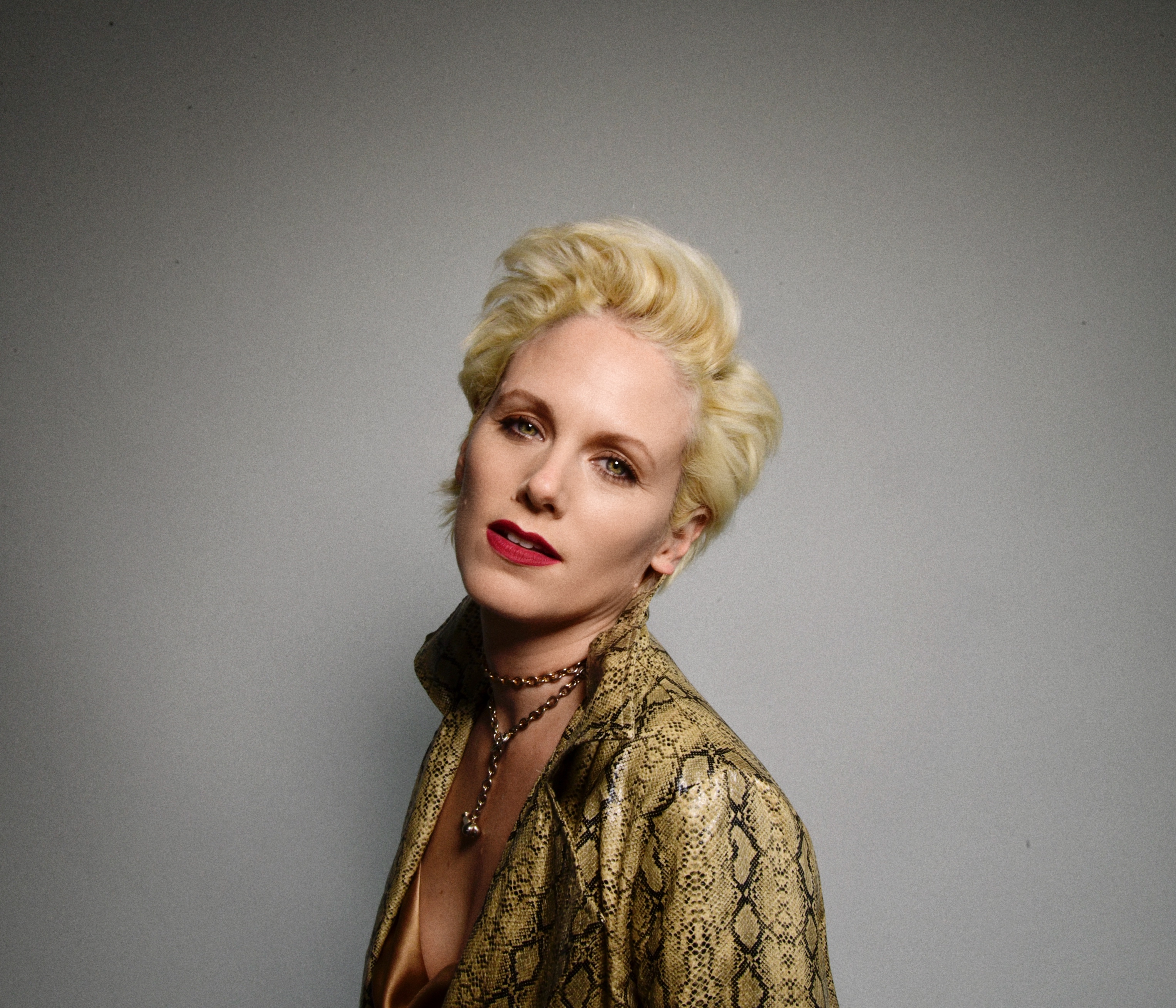
The second show I attended was the much anticipated ?uestlove’s “Philly-Paris Lockdown” with special guest Keren Ann. I was struck immediately by Keren Ann’s voice, which took over the stage though she sang mezzo-piano. She added incredible attitude and richness to the performance. After having heard her live. I must say her recordings don’t do her justice – they hide the depth of her tone. Pallavi Mahidhara also turned in a strong performance at the classical piano, playing a pastiche of impressionist composers Debussy, Satie and Ravel. Having knowledge of these pieces, however, I thought that the arrangement of the music turned into a wash, and would have better been left to the original composition.  Later the band could have used as a sample of whatever piece she had played for the rest of the musicians (like Lamb’s “Angelica” which samples Debussy’s Claire de Lune).

a video of Lamb’s “Angelica”

?uestlove is obviously a consummate musician. Still, I felt that in this performance his playing was too lofty. I would have enjoyed hearing more of his virtuosity and versatility, including funk beats and jazz. In short, I wish he’d let it rip more often.

All the musicians logged excellent performances, including conductor Andrew Cyr, David Murray on Sax, D. D. Jackson on jazz piano, Anthony Tidd on Bass and Keyboards, Derrick Hodge on Bass, and vocalists Amber Coffman, Haley Dekle, Susanna Waiche, and string players Kristin Lee, Becky Anderson, Joanna Franke, and Hiro Matsuo. Still, I wish the arrangers (Daniel Felsenfeld and Larry Gold) had given us more to sink our teeth into.

There was a bit of showmanship that I appreciated from ?uestlove: At the beginning of the show he greeted the audience and asked us all to howl like wolves — which we all did. It engaged us right off the bat and kept our attention for what was a challenging, experimental piece.

Coming up next? Trapeze lessons …

This story is brought to you with the support of PIFA (Philadelphia International Festival of the Arts) <http://www.pifa.org/> . Please Like their Facebook <http://www.facebook.com/PIFA.Philly>  Page and Follow them on Twitter <http://www.twitter.com/PIFAPhilly> !